Understanding the Compression Molding Process for Optimal Product Development

Introduction to Compression Molding
What is Compression Molding?
Compression molding forms plastic or composite materials into precise shapes by placing a preheated charge into an open compression mold and closing it under heat and pressure. The material flows into every cavity before curing into a finished part. This process handles thermoset resins and some thermoplastics effectively. Engineers rely on compression molding processes when parts require high strength and tight tolerances. The method produces items ranging from electrical insulators to automotive components without the need for complex runners or gates found in other techniques. Compression molded parts often show excellent surface finishes and structural integrity straight from the mold.
The technique traces its origins to the early 20th century when it was first applied to phenolic resins for electrical components. Today, modern presses deliver pressures ranging from 100 to 2,000 psi and temperatures between 300°F and 400°F depending on the resin system. Because the mold starts open, operators can position long-fiber reinforcements or metal inserts with greater accuracy than high-shear processes allow. The resulting parts exhibit minimal internal stresses, making compression molding especially suitable for load-bearing brackets, high-voltage insulators, and under-hood automotive shields that must endure continuous thermal cycling.
Importance of Compression Molding in Product Development
Product teams select compression molding because it supports rapid iteration from prototype to full production. The approach reduces material waste compared to machining and delivers consistent mechanical properties across batches. Developers achieve complex geometries and integrated features like threads or bosses in a single operation. Compression molding service providers help companies validate designs quickly while controlling costs during scaling. This flexibility proves valuable when testing load-bearing parts or chemically resistant components before committing to expensive tooling changes.
Because the charge is placed directly into the cavity, engineers can experiment with varying fiber lengths and filler percentages without risking fiber breakage. This freedom accelerates design-of-experiments studies that optimize strength-to-weight ratios. In addition, the process accommodates over-molding of elastomeric seals or conductive traces, allowing teams to consolidate multiple components into one molded assembly and shorten supply-chain lead times.
Overview of Compression Molding Services
Specialized providers offer end-to-end compression molding services that include material consultation, mold design, and production runs. These services cover everything from low-volume prototyping with compression molds to high-volume manufacturing of compression fitting components. Clients receive support for part optimization, insert placement, and secondary operations such as deflashing or painting. Reliable compression molding service partners maintain quality systems that ensure repeatability and traceability throughout fabrication.
Full-service shops often maintain in-house laboratories for rheology testing and cure kinetics analysis, enabling them to recommend the optimal bulk molding compound (BMC) or sheet molding compound (SMC) grade. They also provide value-added services such as coordinate-measuring-machine (CMM) inspection, ultrasonic weld evaluation of inserts, and custom packaging that protects delicate molded features during transit.
The Compression Molding Process Explained
Step-by-Step Breakdown of the Compression Molding Process
Operators begin by weighing and preheating the molding compound to the correct temperature. They position the charge into the lower half of the compression mold, then close the press to apply both heat and pressure. The material softens and fills the cavity completely. Cure time follows, allowing the resin to crosslink and solidify. Finally, workers open the mold and eject the finished part for inspection. Each step in the compression molding process demands precise control of temperature, pressure, and dwell time to avoid defects like voids or incomplete fills.
Modern presses integrate servo-hydraulic controls and real-time data logging so that pressure ramps, temperature profiles, and vacuum assistance can be tuned within ±2 % of target values. Preheating ovens or radio-frequency preheaters bring the charge to 200–250 °F before placement, shortening overall cycle time by 15–25 %. After ejection, robotic handling systems transfer parts to deflashing stations where CNC trimming or media blasting removes flash without damaging critical surfaces.
Materials Used in Compression Molding
Common materials include phenolic resins, epoxy compounds, melamine, and bulk molding compounds reinforced with glass fibers. These thermosets deliver heat resistance and dimensional stability that many plastics cannot match. Some manufacturers also process certain elastomers and high-performance thermoplastics through compression molding. Material selection directly affects flow characteristics, cure rates, and final mechanical properties. Engineers evaluate shrinkage rates and viscosity to match the chosen resin to the part geometry and end-use requirements.
Phenolics remain the workhorse for electrical grades because they offer arc resistance above 180 seconds and continuous-use temperatures up to 400 °F. Epoxy systems provide superior adhesion to metal inserts and lower moisture absorption, while melamine-formaldehyde compounds deliver excellent color stability for appliance housings. Glass-fiber loadings between 10 % and 65 % by weight allow tensile strengths from 8,000 psi to over 30,000 psi, with corresponding adjustments to mold hardness and venting strategy.
Types of Compression Molds and Their Applications
Flash molds allow excess material to escape along the parting line, suiting simple parts with moderate tolerances. Positive molds contain all material inside the cavity for dense, high-strength components. Semi-positive designs combine features of both. Applications span electrical housings, valve seats, and o-ring seals where consistent density matters. Custom compression molds accommodate inserts, undercuts, and multi-cavity layouts to increase throughput during manufacturing runs.
Flash molds are economical for high-volume electrical terminal blocks, while positive molds are preferred for thick-section pump impellers that must achieve near-zero porosity. Multi-cavity family molds can produce left- and right-hand mirror housings in the same shot, and molders increasingly incorporate conformal cooling channels produced by additive manufacturing to reduce cure time on large structural parts.
Comparing Compression Molding with Other Molding Techniques
Differences Between Compression Molding and Injection Molding
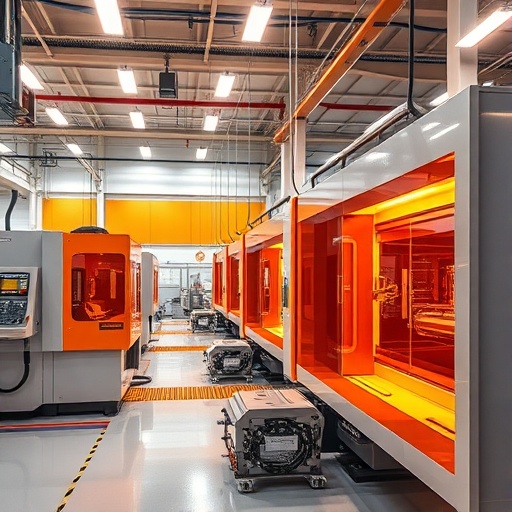
Injection molding forces molten plastic into a closed mold through a nozzle, while compression molding places a solid charge into an open mold before closing. Compression molding typically uses lower pressures and works better with fiber-filled compounds that might break during high-shear injection. Cycle times run longer in compression molding, yet tooling costs stay lower for many part sizes. Plastic injection molding excels at high-volume runs of small, intricate parts, whereas compression molding service teams often handle larger structural components more economically.
Because injection molding subjects material to shear rates exceeding 10,000 s⁻¹, fiber length retention drops dramatically; compression molding preserves fiber lengths above 12 mm, boosting impact strength by 30–50 % in comparable formulations. Tooling for compression molds can be 30–60 % less expensive than equivalent injection molds when part envelopes exceed 12 inches in any dimension.
Advantages of Compression Molding Over Other Methods
Manufacturers gain lower residual stresses and better fiber orientation control with compression molding. The process minimizes knit lines and supports thicker wall sections without sink marks. Compression molded parts frequently require less post-processing than those produced by machining or casting. When projects demand chemical resistance or electrical insulation, compression molding processes deliver consistent performance without the orientation issues common in injection-molded plastics.
Additional benefits include the ability to mold-in logos, textures, and even RFID tags without secondary operations. The low-pressure environment also permits the use of aluminum or Kirksite tooling for prototypes, enabling functional testing within two to three weeks rather than the eight-to-twelve-week lead times typical of hardened steel injection molds.
Common Industries Utilizing Compression Molding Services
Aerospace, automotive, electrical, and industrial equipment sectors depend on compression molding services for durable components. Hardware manufacturers use the technique for brackets and enclosures that face vibration and temperature extremes. Medical and consumer goods companies also turn to compression molding when they need parts free of flow lines or with embedded metal inserts for added strength.
Recent growth areas include battery enclosures for electric vehicles, where compression-molded SMC provides electromagnetic shielding and flame resistance meeting UL 94 V-0 requirements. Wind-turbine nacelle components and 5G antenna radomes also benefit from the process’s ability to produce large, dimensionally stable parts with integrated mounting bosses.
Factors Influencing the Compression Molding Process
Design Considerations for Effective Compression Molding
Part designers maintain uniform wall thickness and generous draft angles to ensure smooth material flow and easy ejection. They position parting lines away from critical surfaces and account for flash thickness in tolerance stack-ups. Ribs and bosses need proper fillets to prevent cracking during cure. Early collaboration with compression molding service experts helps avoid costly mold revisions later in development.
Recommended minimum wall thickness is 0.125 in for most BMC grades, with a maximum thickness-to-flow-length ratio of 1:50. Draft angles of 1–2° per side facilitate ejection, and bosses should incorporate gussets or radii at their base to distribute stress during thermal expansion. Mold flow simulation software now predicts knit-line locations and air-trap zones, allowing designers to adjust gate geometry before steel is cut.
Impact of Material Selection on Compression Mold Performance
The chosen compound determines mold temperature requirements, cure duration, and shrinkage compensation. High-flow resins reduce cycle times but may lower impact strength. Reinforced materials improve stiffness yet demand hardened steel compression molds to resist abrasion. Matching the resin to operating conditions such as chemical exposure or continuous heat ensures the final compression molded part meets specifications without premature failure.
Shrinkage values range from 0.2 % for highly filled phenolics to 0.8 % for unfilled epoxies; post-cure ovens can further reduce warpage by completing cross-linking. Abrasive fillers such as alumina trihydrate require mold cavities plated with chrome or nickel-boron to maintain surface finish beyond 100,000 cycles.
Quality Control in Compression Molding
Teams monitor press parameters in real time and perform dimensional checks plus destructive testing on sample parts. They verify cure completeness through hardness or differential scanning calorimetry. Surface inspection catches defects like blistering or incomplete filling before parts reach assembly. Documented quality control procedures within a compression molding service operation maintain traceability and support regulatory compliance in demanding industries.
Statistical process control (SPC) charts track peak pressure, cure time, and part weight, with automatic alarms triggered when values drift beyond ±3 sigma. Non-destructive techniques such as ultrasonic C-scan and thermography detect internal voids as small as 0.5 mm, ensuring aerospace and medical components meet stringent acceptance criteria.
Applications of Compression Molding in Various Industries
Use of Compression Molding in Food and Beverage Packaging
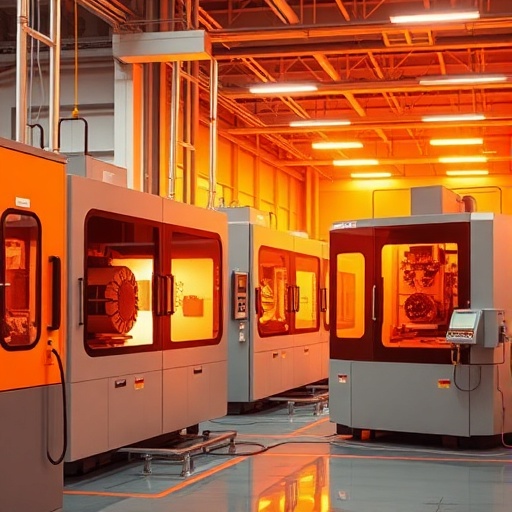
Compression molding produces durable closures, trays, and container components that withstand repeated handling and cleaning. The process creates thick-walled parts with excellent barrier properties using food-grade resins. Manufacturers value the ability to mold-in threads and seals without secondary assembly. Compression molding service providers deliver packaging solutions that meet strict hygiene standards while remaining cost-effective at moderate production volumes.
Typical applications include tamper-evident caps for dairy containers and reusable transport trays for bakery goods. Because the process uses low shear, mineral-filled polypropylene compounds retain their FDA compliance and organoleptic properties even after repeated steam sterilization cycles.
Role of Compression Molding in Medical Device Manufacturing
Medical device firms employ compression molding for housings, trays, and structural elements that require sterilization compatibility and dimensional precision. The low-shear nature of the process preserves fiber length in reinforced plastics used for load-bearing implants or surgical tools. Compression molds accommodate cleanroom production and allow integration of metal components such as hinges or electrodes directly into the plastic part.
Peek and PEI compounds molded via compression deliver autoclave resistance at 270 °F for 100+ cycles while maintaining tensile strength above 12,000 psi. Cleanroom molding cells certified to ISO Class 7 produce surgical instrument handles with embedded stainless-steel bushings that eliminate adhesive bonding steps and associated validation risks.
Customization and Prototyping with Compression Molding
Engineers use compression molding for quick-turn prototypes that closely replicate production parts. Short-run tooling made from aluminum or soft steel supports design validation before investing in hardened production molds. Custom colors, textures, and functional additives integrate easily during the compression molding process. This capability accelerates development cycles for specialized hardware and low-volume manufacturing projects across multiple sectors.
Aluminum prototype molds can be machined in five to seven days and produce 500–2,000 parts before wear becomes noticeable. Texture plates or laser-etched cavities allow rapid evaluation of grip surfaces and branding elements, while pigment or flame-retardant masterbatches can be swapped between trials without purging an entire injection barrel.
See Also
- Unlocking Efficiency with Compression Molding Services for Your Manufacturing Needs
- Maximizing Quality and Cost Efficiency with Professional Compression Molding Services
- Choosing the Right Compression Mold for Your Unique Fabrication Requirements
- Top Benefits of Utilizing Compression Molding Services for Custom Plastic Solutions